

When life throws stress your way, it’s easy to feel like a balloon ready to pop. But what if the secret to releasing that tension lies in something as simple as breathing? Yes, you heard it right—breathing into tension can transform those tight knots in your shoulders into a gentle sigh of relief.
Understanding Breathing Into Tension
Breathing into tension offers a way to address physical stress through mindfulness and focused techniques. This practice helps individuals reconnect with their bodies and facilitate relaxation.
Definition and Importance
Breathing into tension refers to the conscious act of using breath to alleviate stress in areas of the body. This approach emphasizes awareness of tightness and discomfort. Individuals often experience a release when they breathe into these areas, allowing for greater emotional and physical ease. Benefits include improved mental clarity, reduced anxiety, and enhanced relaxation. Practicing this technique can lead to a more grounded state, allowing individuals to manage daily challenges more effectively.
The Science Behind It
Breathing deeply activates the body’s parasympathetic nervous system, promoting a calm response. Scientific studies demonstrate that focused breathwork can lower cortisol levels, which is a stress hormone. Additionally, slow, intentional breathing improves oxygen flow throughout the body, positively impacting heart rate and circulation. Increased oxygenation aids in reducing muscle tension, enhancing overall comfort. Practitioners often report feeling less anxious and more centered after engaging in these techniques, underscoring the scientific basis behind breathing into tension.
Techniques for Breathing Into Tension
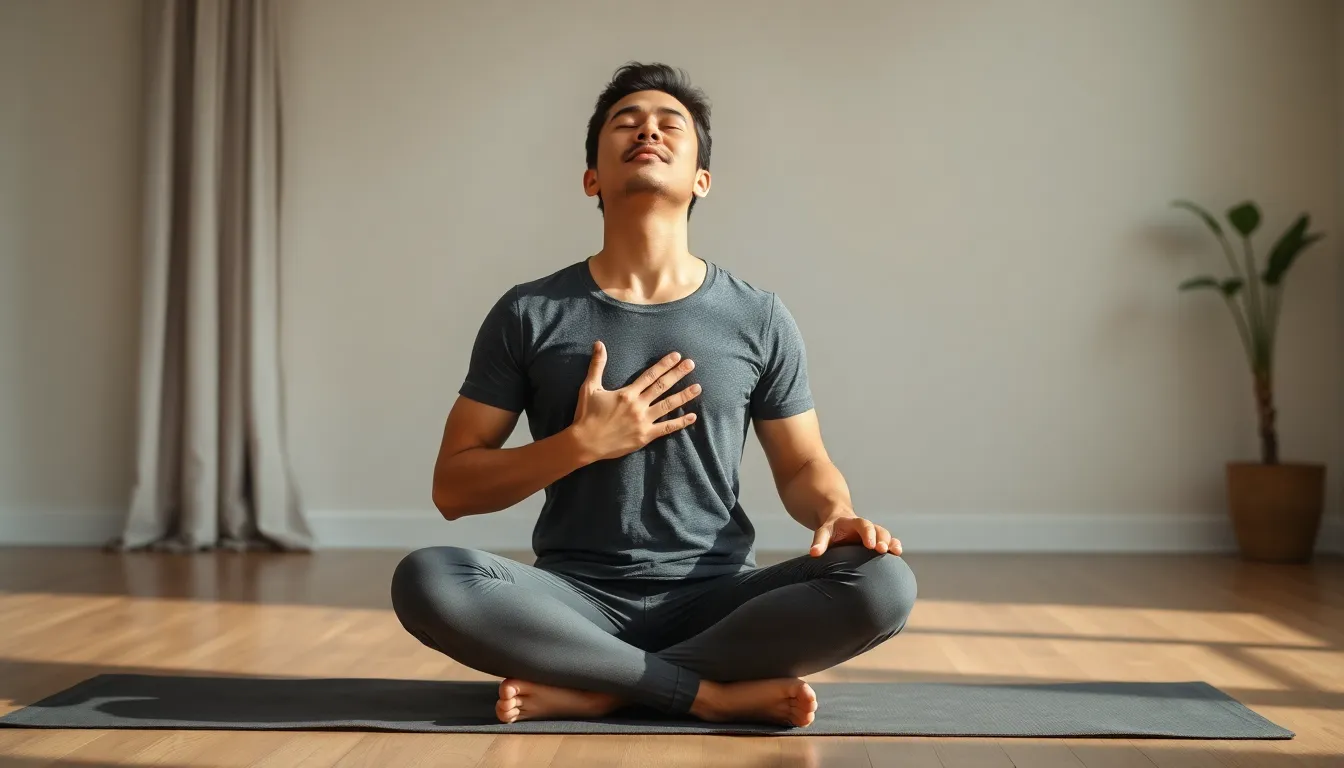
Several techniques exist for effectively breathing into tension, fostering relaxation and relief. Here are two widely used methods.
Diaphragmatic Breathing
Diaphragmatic breathing emphasizes engagement of the diaphragm, a key muscle involved in breathing. Practitioners should sit or lie down comfortably. Then, they place one hand on the abdomen and the other on the chest. Inhaling deeply through the nose expands the abdomen rather than the chest. Exhaling slowly through pursed lips allows for controlled release of breath. This technique improves oxygen flow and promotes a sense of calm. Research indicates that diaphragmatic breathing lowers cortisol levels, helping reduce anxiety and fostering mental clarity.
Box Breathing
Box breathing is a structured technique designed to enhance focus and control. This method involves four equal phases: inhaling for a count of four, holding the breath for four counts, exhaling for another four, and then pausing for four counts before inhaling again. Practicing this cycle several times cultivates a rhythmic breathing pattern, promoting relaxation. Athletes and individuals in high-pressure environments often use box breathing to manage stress and regain composure under challenging situations. Studies show that this technique activates the parasympathetic nervous system, contributing to reduced tension and overall well-being.
Benefits of Breathing Into Tension
Breathing into tension offers notable advantages for both physical and mental well-being. This method can significantly enhance quality of life.
Physical Benefits
Physical benefits manifest through increased oxygen flow, which nourishes muscles and organs. Reduced muscle tension directly leads to enhanced flexibility and movement. Practicing breathing techniques aids in lowering heart rate and blood pressure, resulting in improved cardiovascular health. Furthermore, deep breathing stimulates the parasympathetic nervous system, which promotes relaxation. Tight areas in the body, such as the neck and shoulders, frequently respond positively to mindful breathing, alleviating discomfort and stiffness. Overall, embracing these techniques promotes a profound sense of physical comfort and vitality.
Mental and Emotional Benefits
Mental and emotional benefits stem from a heightened sense of clarity and focus. Calming the mind through intentional breathing reduces feelings of anxiety and stress, facilitating better emotional regulation. Engaging in this practice fosters a deeper awareness of one’s thoughts and feelings. This awareness enables individuals to approach challenges with greater resilience. Research indicates that consistent mindfulness practices improve overall mood and emotional stability. Enhanced relaxation from breathing techniques also contributes to heightened creativity and productivity, making it easier to navigate daily responsibilities.
Common Misconceptions
Misunderstandings surrounding breathing into tension exist. They often hinder individuals from fully benefiting from these techniques.
Myths About Breathing Techniques
Many believe that deep breathing must always involve long and slow inhalations. This isn’t accurate; effective techniques can vary. Some individuals think that breathing exercises only serve calming purposes. In reality, certain techniques also promote alertness and focus. Furthermore, there’s a common myth that breathing into tension requires immediate relief from discomfort. Gradually, awareness and lessening of tension can occur over time.
Misunderstanding Tension
Tension often gets characterized solely as physical tightness. However, emotional stress contributes significantly to overall discomfort. Individuals frequently mistake temporary sensations as permanent issues. Understanding that tension can shift and dissipate with mindful practices is crucial. A belief exists that tension exists only in specific areas like the neck or shoulders. In truth, it can manifest throughout the body, impacting overall well-being. Addressing tension through breathing techniques thus requires comprehensive awareness of the entire body.
Breathing into tension offers a powerful tool for managing stress and enhancing overall well-being. This practice not only alleviates physical tightness but also fosters emotional resilience. By incorporating techniques like diaphragmatic and box breathing, individuals can cultivate a deeper awareness of their bodies and emotions.
Regular practice leads to improved mental clarity and reduced anxiety, making daily challenges more manageable. Embracing mindful breathing allows for a more centered and focused approach to life. As individuals learn to navigate their tension with intention, they unlock the potential for greater comfort and vitality.